WE DELIVER TO JAMAICA PLAIN, ROXBURY, WEST ROXBURY, ROSLINDALE, AND BROOKLINE!
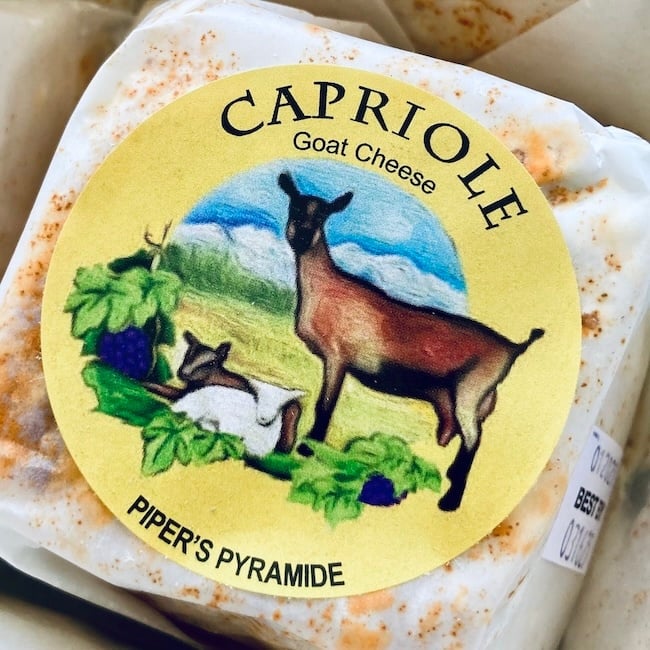
Capriole Piper's Pyramide 10oz
Product price
Maximum quantity reached
Out of stock
Description
Named for our founder’s red-haired granddaughter, Piper is bright and refreshing with a spicy, smoky edge. Winner of many American Cheese Society awards, including in 2016, Piper is not just 'la belle' for many a Capriole fan, but is often the ripened cheese of choice at the creamery as well. A perfect retail size, this cheese ripens so beautifully we always come back for more. Carefully hand-ladled into individual molds, Pipers have a lovely light, cloudlike texture that gets denser and more buttery with age, breaking down into a thick cream line and a fudgy paste. Laced with just a touch of smoked paprika, it is 10 days in production and goes out very young—but it’s still delicious 5-6 weeks from the code date.
Pairing Suggestions: Albariño, Pouilly Fuisse, Vouvray, Rosé, Sancerre, Prosecco, Gruner Veltliner, light gin cocktails, Spanish Sidra, Saisons, and Wheat Ales.
Serving Suggestions: Serve with wedges with peppadews or pickled okra, and/or slices of charcuterie. Wedge a piece of Pipers in a half poblano, or you favorite pepper, and grill. Put slices of Pipers on a white bean and kale salad, garnished with with currants and balsamic. Wrap a wedge of Pipers and slice of ripe pear or melon, in prosciutto.
Mold Education from Capriole: Seasonally, our ripened geo cheeses may have spots of white or blue penicillum molds - just like their French cousins. In our small facility we manage several aging and ripening rooms with competing mold rinds: Geotrichum Candidum, the wrinkled, delicate mold on Wabash Cannonball, Piper's Pyramide, Sofia and Flora; the more aggressive and mushroomy Penicillum Candidum on Old Kentucky and Julianna (The white spots); the stinky, orange bacterial B. Linen on Mont St. Francis; and some naturally occurring seasonal molds like the blue and greenish-blue ones. Sometimes, these molds "escape" in spite of our best efforts to contain them. They may not be beautiful but they are not harmful, and unless they overgrow the cheese, should not affect the flavor of the cheese.